
Linerless labels are pressure-sensitive labels manufactured without a traditional release liner. Successful linerless labeling depends on the right combination of label material, adhesive, printer compatibility, application requirements and performance characteristics. Understanding how these elements work together helps businesses select a linerless solution suited to their operation.
Linerless labels are helping organizations make their labeling operations more efficient, reduce waste, and simplify day-to-day workflows.
For demanding applications such as foodservice, retail, manufacturing, and logistics, these advantages can translate into meaningful improvements in productivity and operating costs.
But maximizing the value of a linerless labeling solution requires more than choosing the right media. The printer itself—and how it is maintained—plays an equally important role in delivering reliable performance.
Linerless Labels Are Designed for Reliable Performance
Linerless labels are engineered specifically to support continuous thermal printing and dispensing without a release liner. Specialized materials, coatings, and adhesives work in tandem to help labels feed smoothly, maintain adhesion, and perform reliably through the printing and dispensing process.
When properly matched to the printer and application, quality linerless media can help deliver:
- Reduced material waste
- Fewer roll changes
- Consistent print quality
- Reliable cutting performance
- Improved operational efficiency
Why “Self-Cleaning” Labels Don’t Eliminate Maintenance
The term “self-cleaning” can create the impression that a linerless label can prevent or remove contamination from the printer. Over time, normal printer operation will introduce dust, paper particles, adhesive residue, grease, and other contaminants into the print path. Linerless labels cannot clean the printhead, platen roller, sensors, cutter, or other critical printer components.
What Happens Inside a Thermal Printer?
Every thermal printer is exposed to environmental contaminants during normal operation. In demanding environments such as restaurants and foodservice operations, printers may be exposed to heat, humidity, grease, airborne particles, and frequent use. These conditions can accelerate contamination and increase the need for routine cleaning—regardless of the label technology being used.
Over time, this buildup can contribute to:
- Inconsistent print quality
- Misfeeds or jams
- Sensor problems
- Increased downtime and repair/replacement
The Formula for Reliable Linerless Performance
Reliable linerless printing isn’t the result of a single product or technology. It comes from bringing several elements together:
Quality media + compatible equipment + routine maintenance + proper operating conditions = reliable performance
Quality linerless labels provide the foundation. The right printer ensures that the media and equipment work together as intended. Routine maintenance helps keep critical components clean and functioning properly. And appropriate operating conditions help minimize environmental factors that can affect performance.
When these elements work together, organizations are better positioned to achieve consistent output, minimize disruptions, and reduce unplanned downtime.
The Value of a Proactive Maintenance Program
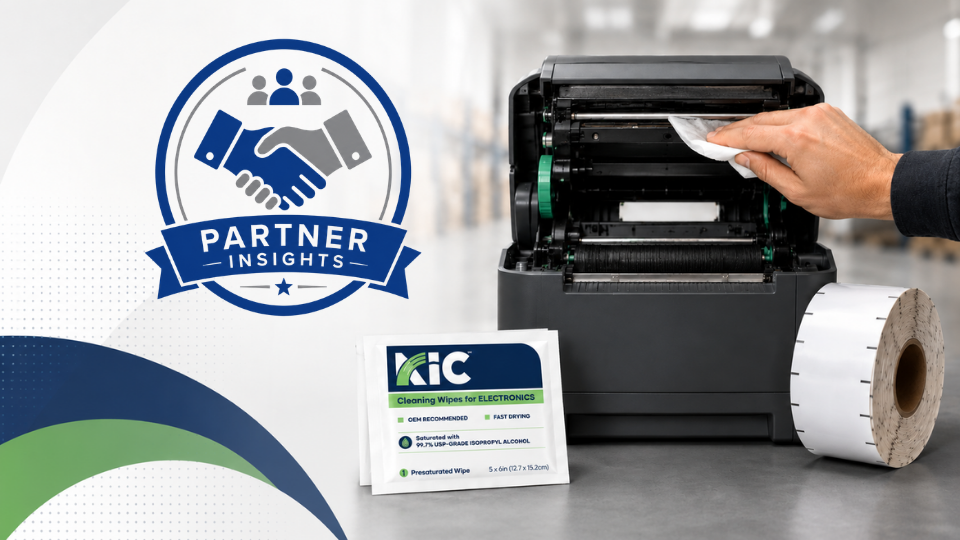
Routine cleaning is a simple step that can significantly affect a thermal printer’s long-term performance.

“By incorporating OEM-recommended preventive maintenance steps into standard operating procedures, organizations can help maintain print quality, reduce unexpected interruptions, and extend the useful life of critical printer components. This becomes particularly valuable in high-volume or demanding environments where even a short period of downtime can disrupt operations.” – KIC
Understanding the Complete Picture
Linerless labels offer compelling advantages: less waste, fewer roll changes, and streamlined operations. Those benefits make linerless technology an increasingly valuable solution for many labeling applications.
But the best results come from looking at the complete printing system.
No label—regardless of its construction or performance characteristics—can replace proper printer care. The most reliable operations combine quality linerless media, compatible equipment, proven testing, appropriate operating conditions, and regular maintenance.