Food waste isn’t always caused by spoilage.
In many quick-service restaurants, operational errors contribute to thousands of dollars in avoidable waste each year. Something as simple as manual labeling methods or unclear food identification can lead to remakes, discarded ingredients, order errors, and poor customer experiences. That’s where linerless labels can make a meaningful difference. By improving product identification and order accuracy, these labels help QSRs reduce waste before it starts.
How can linerless labels help reduce food waste in QSR operations?
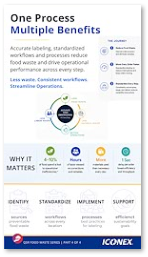
Linerless labels can help QSRs reduce avoidable food waste by improving food and order identification, standardizing labeling processes, and reducing errors that lead to remakes or discarded ingredients. Clear, consistent labeling can also support faster workflows, better order accuracy, and more efficient restaurant operations.
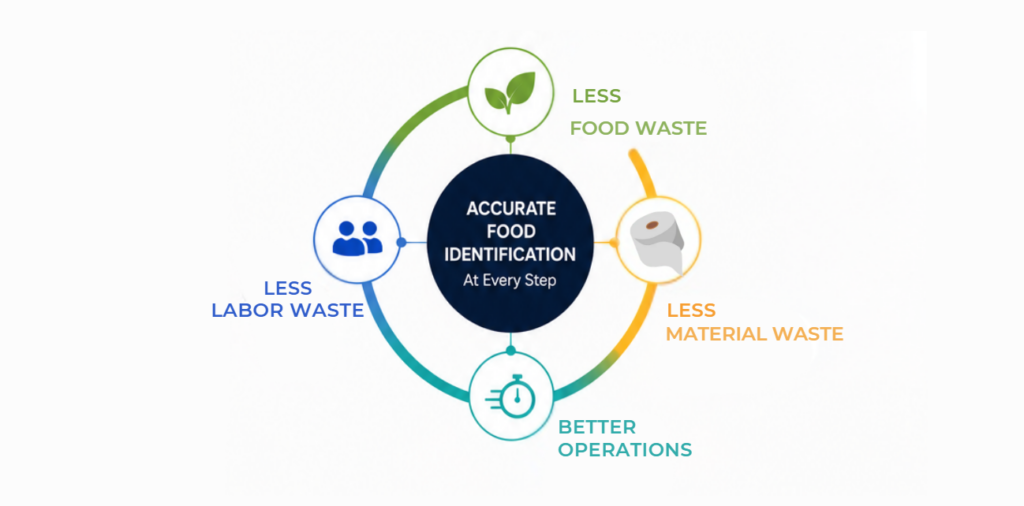
Four Ways Better Labeling Can Reduce Waste
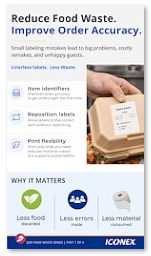
Reduce Food Waste
Improve food and order identification to help prevent mistakes, remakes and unnecessary disposal.
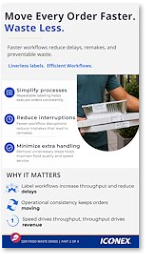
Reduce Labor Waste
Clear, standardized labeling can reduce manual steps and time spent correcting order errors.
Reduce Material Waste
Linerless labels eliminate the release liner and can provide more labels per roll, reducing unnecessary material and roll changes.
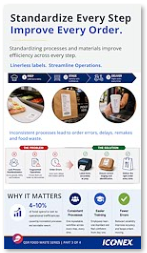
Improve Operations
Standardized labeling helps create more consistent workflows across preparation, staging and order fulfillment.
Frequently Asked Questions
How can QSRs reduce avoidable food waste?
QSRs can reduce avoidable waste by improving food identification, order accuracy, inventory practices and standardized workflows that help prevent mistakes, remakes and unnecessary disposal.
How do labeling errors contribute to restaurant food waste?
Incorrect, unclear or inconsistent labeling can contribute to order errors, remakes and discarded food. Clear identification helps employees correctly prepare, stage and fulfill orders.
How do linerless labels help reduce QSR food waste?
Linerless labels provide clear food and order identification while supporting standardized workflows, helping reduce errors that can result in remakes and discarded ingredients.
How can linerless labels reduce material waste?
Linerless labels eliminate the release liner used with traditional pressure-sensitive labels, reducing material that must be handled and discarded.
How does order accuracy affect QSR food waste?
Incorrect orders can require food and beverages to be remade, creating unnecessary food, material and labor waste. Improving order identification can help reduce these avoidable errors.
Download the QSR Food Waste Series
Download the full infographic series to uncover additional insights and practical strategies for minimizing waste, improving efficiency, and protecting your margins.